This page provides practical background information for conference participants, including Kazakhstan’s general context, everyday life in Almaty, safety considerations, and suggestions on culture, food, and weather in late September.
Kazakhstan: general context and everyday life
Kazakhstan’s broader domestic context is favorable for hosting an international conference. Economically, Kazakhstan’s GDP per capita is among the highest in the group of non-EU former Soviet republics. The country follows a multi-vector foreign policy and seeks to maintain working relations with major powers while staying out of armed conflicts, which lowers the risk that international political tensions or sanctions will directly affect participants’ ability to travel. The overall public-health and sanitary situation is currently assessed by national authorities as stable.
Kazakhstan is a secular state whose constitution guarantees freedom of religion and belief. The majority of the population adheres to Sunni Islam of the Hanafi school, practiced in a moderate form alongside Russian Orthodoxy and other faiths. In everyday life, religious norms impose few visible restrictions on clothing, food, or social interaction. For many visitors, the atmosphere in Almaty will feel similar to large urban centers in Turkey.
Kazakhstan has a centralized political system; at the same time, it maintains space for expert debate, professional associations, and parts of civil society, which facilitates cooperation between universities, NGOs, and international organizations.
Almaty at a glance
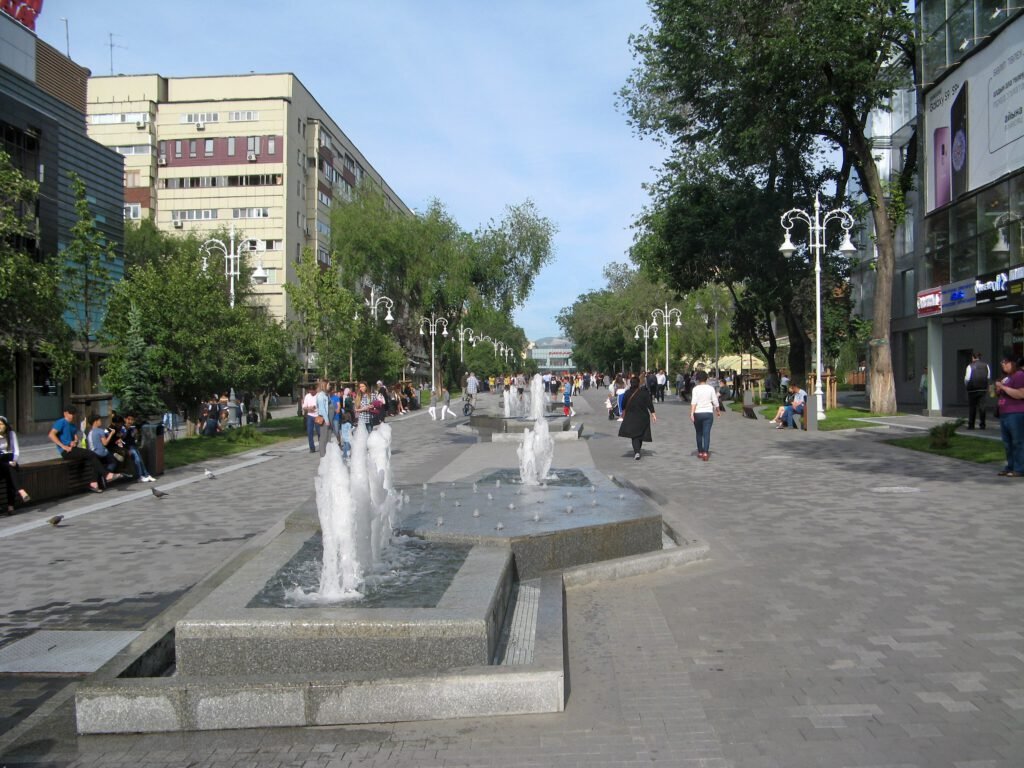
Zhibek Zholy Street, Alma-Ata (Almaty) — Photo by Ekaterina Borisova (Wikimedia Commons), licensed under CC BY-SA 4.0. Source: Wikimedia Commons
Almaty is Kazakhstan’s largest city and its main cultural, university, and economic center. With more than two million inhabitants and the highest regional GDP in the country, per capita income in Almaty is broadly comparable to that of many Eastern European EU member states.
Safety and air quality
Almaty is generally considered reasonably safe by international standards, with crime rates comparable to cities such as Milan or Seattle. Most concerns relate to petty and property crime rather than violence.
The recorded impact of terrorism is very low; this is reflected in everyday arrangements, for example in the absence of security screening at the entrance to Almaty International Airport (screening takes place at standard departure control only).
One structural challenge for the city is air quality in the cold season, when coal-based heating and basin-like topography can produce smog episodes. These conditions are most pronounced in winter; by contrast, in late September heating demand is low and air quality is typically more favorable, especially during the day.
Culture and public spaces
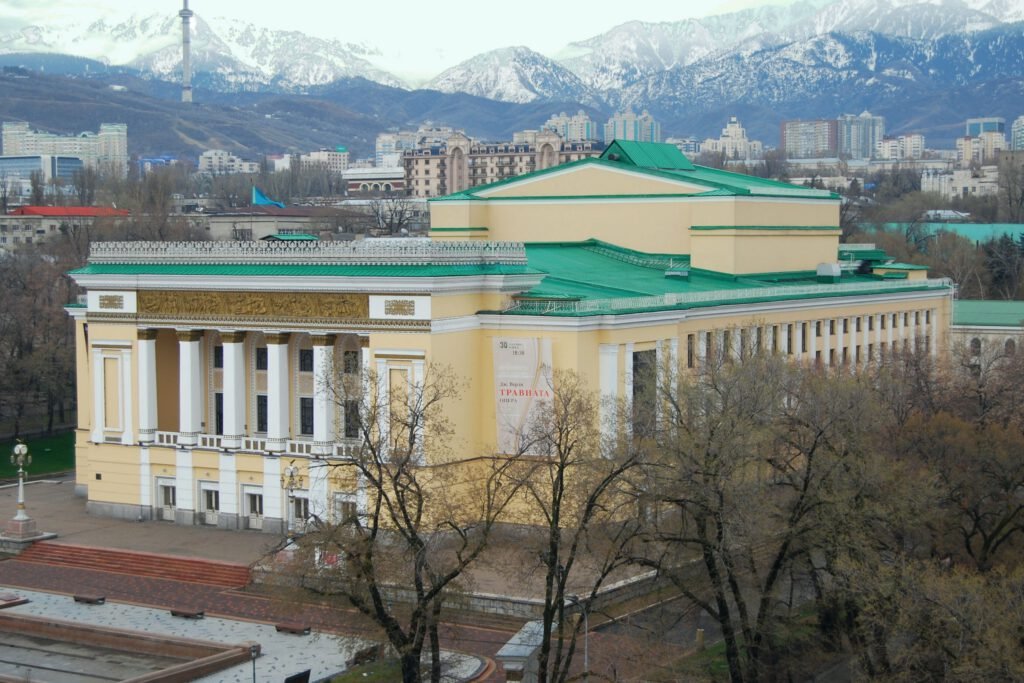
Almaty offers good access to cultural attractions. The nearby Abay Kazakh National Opera and Ballet Theatre maintains a full repertory in a 1940s landmark building and uses Russian- and English-language surtitles for many performances, making productions accessible to international visitors.
Kazakh National Opera and Ballet Theatre. Photo by Michael Graul (Wikimedia Commons), CC BY-SA 3.0. Source: Ru-Wikivoyage.
Major museums, including the Central State Museum of Kazakhstan and the A. Kasteev State Museum of Arts, provide a concise introduction to the country’s history and visual culture.
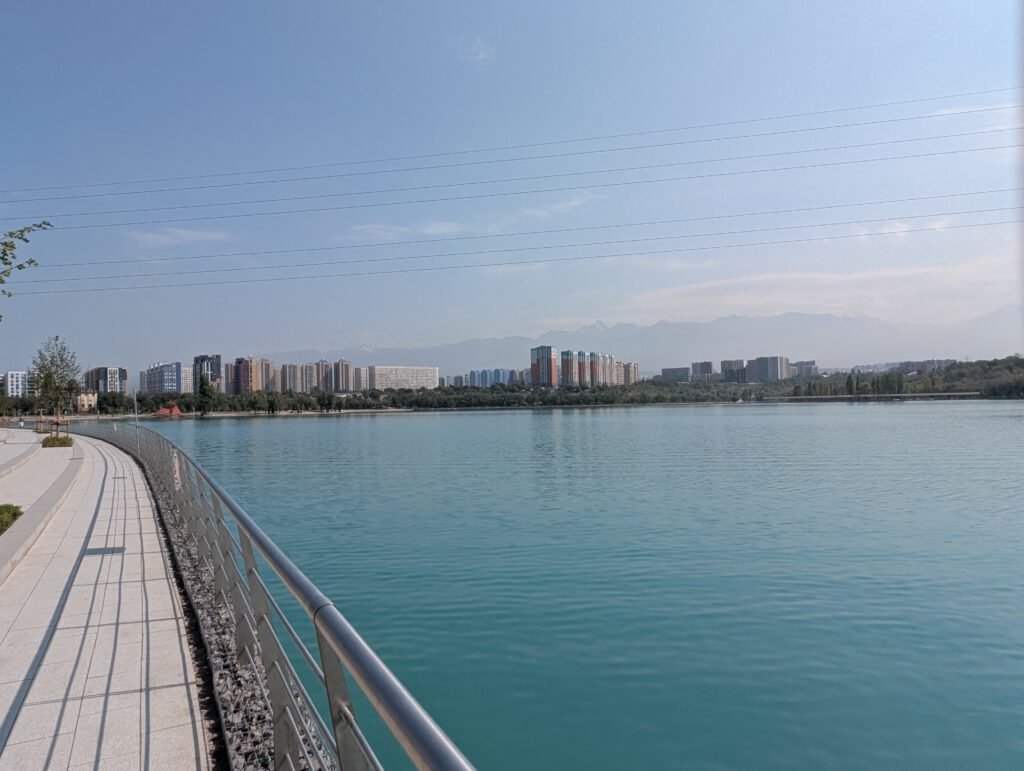
Recent investments in public spaces have also created new areas for walking and informal meetings, such as Sairan Lake, which has been redeveloped as a lakeside park with a walking and cycling loop, beach area, and sports facilities.
Accommodation
Accommodation in the city center is available across a wide range of price points. A quick survey of major booking platforms conducted at the end of 2025 (using filters for single occupancy, a private bathroom, a central location, guest ratings above 8/10, and free cancellation) suggests the following indicative rates:
– International four-star chain hotels: typically around USD 200 per night;
– International three-star brands: typically USD 90–120 per night;
– Locally branded three- and four-star hotels: often more moderately priced, with many options starting from about USD 45 per night under comparable conditions.
– In addition, a broad supply of apartments and private rooms is available via Booking.com, Airbnb, and similar platforms.
Important note: hotel selection and booking are the sole responsibility of participants. The organizers do not arrange accommodation and do not book hotels on participants’ behalf.
Food and affordability
Almaty’s restaurant scene is diverse and generally affordable. In and around the conference area, participants will find Kazakh, Russian, Turkish, Indian, Italian, Korean, and Chinese restaurants, ranging from small family cafés to mid-range and higher-end venues. Casual chain cafés offering local, Turkish, Chinese, and Korean food are widely available and well suited for quick lunches.
For low-cost options, the self-service cafeteria chain “Kaganat” is present in central districts and typically offers a hot meal, salad, and drink for about USD 5–6 per person.
Weather in late September
Late September is one of the most comfortable times of year in Almaty. Daytime temperatures are usually slightly above 20°C (around 70°F), with cooler but generally mild evenings. It is no longer as hot as mid-summer and does not coincide with the main cold-season smog or prolonged rainy periods; showers can occur but are usually brief.
Overall, the weather in this period is well suited for walking in the city, outdoor social events, and short trips into the surrounding mountains.